Aluminum sheets are widely used in industrial manufacturing, metal fabrication, construction, equipment production, and various engineering applications. Depending on the alloy grade, temper, thickness, and dimensions, each type of aluminum sheet offers different material properties and suitability for specific applications.
For businesses, selecting the appropriate alloy grade, thickness, dimensions, and temper is important to meet technical requirements while supporting efficient fabrication and cost control.
What Are Aluminum Sheets?
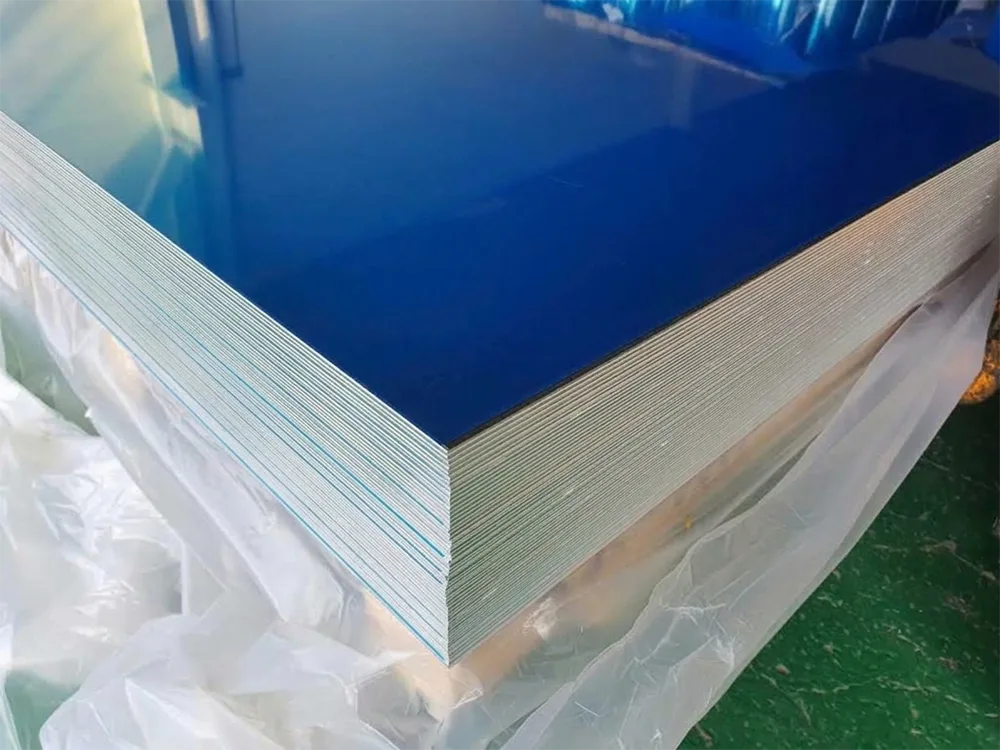
Aluminum sheets are flat aluminum products manufactured in different thicknesses and dimensions. They are available in various alloy grades and tempers to meet specific application and processing requirements.
Compared with commercially pure aluminum, aluminum alloys contain controlled amounts of elements such as magnesium, silicon, copper, manganese, or zinc to improve mechanical properties, machinability, strength, and corrosion resistance.
Key characteristics commonly considered when selecting aluminum sheets include:
- Relatively low weight.
- Good corrosion resistance in many environments.
- Suitable for cutting, bending, drilling, milling, and other fabrication processes.
- Available in a wide range of thicknesses, dimensions, and alloy grades.
- Certain alloys can be heat-treated to improve strength.
- Suitable for a wide range of manufacturing and engineering applications.
Common Types of Aluminum Sheets
Aluminum sheets can be classified based on alloy grade, material properties, temper, and intended application.
Some commonly used aluminum alloy grades for industrial manufacturing and fabrication include:
A1050 Aluminum Sheet – High-Purity Aluminum
A1050 belongs to the commercially pure aluminum group and offers good electrical and thermal conductivity, high ductility, and good formability.
It is commonly considered for applications that do not require high mechanical strength but require good formability and ease of processing.
Typical applications include:
- Simple fabricated and formed components.
- Heat-transfer applications.
- Electrical applications.
- Packaging and formed products.
- Certain decorative applications.
A3003 Aluminum Sheet – A Balance of Strength and Workability
A3003 is an aluminum-manganese alloy with higher strength than A1050, along with good corrosion resistance and formability.
It is commonly considered for applications requiring a balance of strength, workability, corrosion resistance, and material cost.
Typical applications include:
- Tanks and containers.
- HVAC systems.
- Heat-exchange equipment.
- Mechanical components.
- Certain outdoor applications.
A5052 Aluminum Sheet – Strength and Corrosion Resistance
A5052 is an aluminum-magnesium alloy known for its good corrosion resistance and relatively high strength. It is particularly relevant to applications exposed to humid environments or where higher strength is required.
Typical applications include:
- Equipment and structural components.
- Mechanical components.
- Coastal and marine environments.
- Shipbuilding.
- Tanks, containers, and formed components.
A6061 Aluminum Sheet – Versatile Alloy for Mechanical Fabrication
A6061 is one of the widely used aluminum alloys for mechanical fabrication and manufacturing. It offers good strength, machinability, and availability in different tempers such as T6 and T651.
A6061 is suitable for applications requiring a combination of strength, machinability, and consistent material performance.
Typical applications include:
- Machine components.
- Mechanical structures.
- Equipment frames and components.
- CNC machining.
- Fabricated parts and components.
Aluminum Sheet Categories by Properties and Applications
Rather than selecting aluminum sheets based solely on the alloy designation, businesses can also evaluate materials according to their actual application and technical requirements.
Aluminum Sheets for Mechanical Fabrication
This group focuses on aluminum alloys with good machinability and suitability for cutting, milling, drilling, turning, and CNC machining.
A6061 is commonly considered for mechanical components and structural parts requiring relatively high strength and good machinability.
Aluminum Sheets for Corrosion-Resistant Applications
For humid, outdoor, coastal, or other potentially corrosive environments, corrosion resistance is an important material selection criterion.
A3003 and A5052 may be considered for these applications, depending on the operating environment and specific technical requirements.
Aluminum Sheets for Engineering Applications
Engineering applications may require tighter control over alloy grade, temper, applicable standards, thickness, dimensions, and quality documentation.
For such requirements, businesses should clearly define their material specifications before purchasing so that the supplied material can be properly matched to the intended application.
Key Industries Using Aluminum Sheets
Thanks to the wide range of available alloys and specifications, aluminum sheets are used across many industries:
- Mechanical Engineering & Manufacturing: Machine components, structures, and fabricated parts.
- Construction: Structural, architectural, and decorative applications.
- Transportation: Components and structures where lightweight materials are required.
- Electrical & Electronics: Applications requiring electrical conductivity or heat dissipation.
- HVAC & Industrial Equipment: Tanks, heat-exchange equipment, and related components.
- Shipbuilding: Components and structures suitable for aluminum alloy applications.
- Equipment Manufacturing: Machine housings, frames, panels, and fabricated components.
Key Specifications to Consider When Purchasing Aluminum Sheets
The alloy grade is only one part of a complete purchasing specification. Businesses should provide as much relevant information as possible to ensure the appropriate material can be identified.
1. Alloy Grade
Examples include A1050, A3003, A5052, and A6061, or equivalent grades according to the applicable standard.
2. Thickness
Thickness directly affects material weight, fabrication requirements, and structural performance.
3. Sheet Dimensions
Specify the required length and width, or the preferred sheet dimensions, to facilitate material planning and fabrication.
4. Temper
Some aluminum alloys are available in different tempers, such as T0, T4, T6, and T651. The appropriate temper should be selected according to mechanical requirements and the intended fabrication process.
5. Applicable Standard
Depending on the product and application, businesses may require materials manufactured or supplied according to standards such as ASTM, JIS, EN, GB/T, AMS, or other applicable technical standards.
6. Số lượng
The required quantity helps the supplier assess product availability, packaging and logistics requirements, and prepare a quotation accordingly.
7. Intended Application
Information about the final application provides additional context for recommending an appropriate alloy grade and specification.
How to Choose the Right Aluminum Sheet for Your Business
There is no single aluminum sheet suitable for every application. Businesses should start with their actual technical requirements rather than selecting a material based solely on its alloy designation.
As a general reference:
- For high ductility and good formability: commercially pure aluminum such as A1050 may be considered.
- For a balance of strength and workability: A3003 may be suitable for certain applications.
- For humid environments or applications requiring good corrosion resistance: A5052 may be considered.
- For mechanical fabrication and higher strength requirements: A6061 is a commonly used option.
The final material selection should always be based on the technical requirements, operating conditions, fabrication process, and applicable product standards.
SUNRIMEX – Aluminum Sheet Information and Business Requirements
SUNRIMEX is a brand of Binh Minh Import Export Trading Co., Ltd., operating in import and export trading with a focus on aluminum sheets and aluminum coils for business customers.
Businesses can submit information such as alloy grade, thickness, dimensions, temper, applicable standard, quantity, and intended application. Our team will review the requirements, assist with product specifications, and discuss availability, supply options, and quotations based on each specific inquiry.
SUNRIMEX Contact Information
Binh Minh Import-Export Trading Co., Ltd.
Address: No. 44, Street No. 2, Cityland Park Hills, Go Vap Ward, Ho Chi Minh City, Vietnam
Phone / Zalo: 0971 589 968
Looking for Aluminum Sheets Based on Your Specifications?
Send us your alloy grade, dimensions, thickness, quantity, and intended application so SUNRIMEX can review your requirements and assist with product consultation and a quotation.
Article written by: SUNRIMEX
DISCUSSION
Discuss This Article
Submit a question or feedback related to this article.