
Pure aluminum and aluminum alloys differ mainly in their chemical composition, mechanical properties, machinability, and range of applications. Pure aluminum has a high aluminum content and is known for its excellent electrical and thermal conductivity, ductility, and formability. Aluminum alloys, on the other hand, contain controlled amounts of elements such as manganese, magnesium, silicon, copper, or zinc to improve strength, hardness, machinability, corrosion resistance, or other performance characteristics.
For businesses using aluminum sheets and coils in manufacturing, understanding these differences is important when selecting the appropriate alloy grade, specifications, and material properties for a particular application.
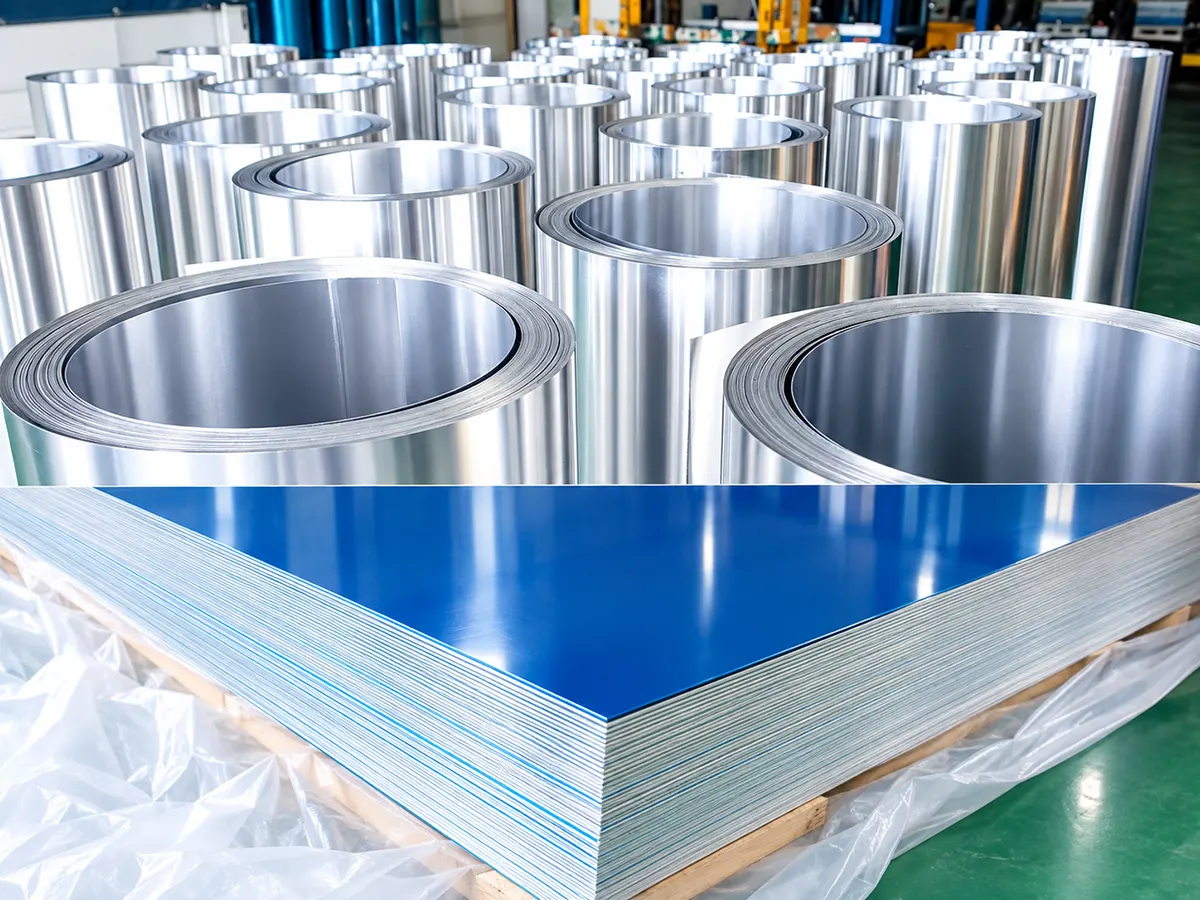
What Is Pure Aluminum?
Pure aluminum is a material with a very high aluminum content, while other elements are present only in controlled, relatively low amounts. A1050, for example, typically contains at least 99.5% aluminum.
Due to its high aluminum content, pure aluminum offers several notable characteristics:
- Good electrical conductivity.
- Good thermal conductivity.
- High ductility.
- Easy bending, cutting, and forming.
- Good corrosion resistance in many environments.
- Lightweight.
- Suitable for applications that do not require high mechanical strength.
Pure aluminum is commonly selected when electrical conductivity, thermal conductivity, ductility, or formability is more important than high mechanical strength.
What Is an Aluminum Alloy?
An aluminum alloy is aluminum combined with one or more other elements in controlled proportions to modify and improve specific material properties.
Common alloying elements include:
- Manganese (Mn): Helps improve strength and corrosion resistance.
- Magnesium (Mg): Increases strength and corrosion resistance.
- Silicon (Si): Supports casting and processing characteristics in certain alloy systems.
- Copper (Cu): Can significantly increase strength.
- Zinc (Zn): Commonly used in high-strength aluminum alloys.
Common aluminum alloy grades include A3003, A5052, A6061, and A7075. Each grade has its own chemical composition, mechanical properties, and processing characteristics. Therefore, the term “aluminum alloy” alone is not enough to determine whether a material is suitable for a specific application.
How Are Pure Aluminum and Aluminum Alloys Different?
The differences can be considered from several perspectives.
1. Chemical Composition
Chemical composition is the fundamental difference.
Pure aluminum contains a very high percentage of aluminum. For example, A1050 typically contains at least 99.5% Al.
Aluminum alloys contain additional elements such as Mn, Mg, Si, Cu, or Zn in controlled proportions. These elements influence the strength, hardness, corrosion resistance, and processing characteristics of each alloy grade.
2. Strength and Hardness
Pure aluminum generally has lower mechanical strength than many aluminum alloys.
Aluminum alloys are developed to provide improved strength, hardness, load-bearing capability, or other mechanical properties. For example, A6061 is widely used for mechanical components and structural applications, while A7075 is a high-strength aluminum alloy.
Therefore, when a product must withstand significant loads or requires higher hardness, an aluminum alloy may be more appropriate than a high-purity aluminum grade.
3. Formability and Machinability
Pure aluminum generally offers good ductility and is relatively easy to bend, cut, stamp, and form.
Many aluminum alloys also offer good formability, but their processing characteristics depend on the specific alloy grade and temper. A3003, A5052, A6061, and A7075, for example, can behave differently during fabrication and machining.
When purchasing aluminum for manufacturing, businesses should consider the temper, or material condition, when it affects the required processing or mechanical performance.
4. Corrosion Resistance
Aluminum generally has good corrosion resistance because a natural oxide layer forms on its surface.
However, the actual corrosion resistance varies among different alloy grades. Some alloys, such as A5052, are commonly considered for outdoor, humid, or other environments where good corrosion resistance is required.
Therefore, material selection should be based on the actual service environment rather than simply whether the material is classified as “pure aluminum” or “aluminum alloy.”
Quick Comparison
| Criteria | Pure Aluminum | Aluminum Alloys |
|---|---|---|
| Composition | High aluminum content | Aluminum combined with alloying elements |
| Ductility | Generally high | Depends on the alloy grade |
| Strength | Generally lower | Can be significantly higher |
| Hardness | Relatively low | Depends on alloy and temper |
| Electrical Conductivity | Good | Generally lower than pure aluminum |
| Thermal Conductivity | Good | Depends on alloy composition |
| Formability | Good | Depends on alloy grade and temper |
| Applications | Electrical, thermal, forming, decorative | Mechanical, structural, equipment, industrial |
When Should You Choose Pure Aluminum?
Pure aluminum is suitable when a business prioritizes ductility, electrical conductivity, thermal conductivity, and formability over high mechanical strength.
For example, A1050 may be considered for products and components requiring good formability, as well as applications involving heat transfer, electrical conductivity, and industrial products that do not require high load-bearing capability.
When Should You Choose an Aluminum Alloy?
Aluminum alloys are generally more suitable when a product requires higher strength, hardness, load-bearing capability, or specific mechanical properties.
Examples include:
- A3003: Commonly considered for HVAC equipment, heat exchangers, tanks, and products requiring a balance of strength and formability.
- A5052: Suitable for many applications requiring good strength and corrosion resistance.
- A6061: Widely used in mechanical, structural, and engineering applications requiring a balance of strength and machinability.
- A7075: Selected for applications requiring high mechanical strength and a favorable strength-to-weight ratio.
These examples are for general guidance. The appropriate alloy grade should be determined based on the specific technical requirements of the finished product.
What Information Should You Consider When Purchasing Aluminum?
A common mistake when purchasing aluminum is to specify only the alloy grade without providing the complete product requirements.
For aluminum sheets or coils, businesses should provide as much of the following information as possible:
- Alloy grade
- Thickness
- Width or sheet dimensions.
- Temper.
- Applicable standard.
- Required quantity.
- Intended application.
- Packaging requirements.
- Delivery location.
Providing these details helps the supplier better understand the requirements and provides a basis for checking product availability, specifications, and quotation terms.
Conclusion
Pure aluminum and aluminum alloys are not interchangeable in every application. Pure aluminum is known for its high aluminum content, ductility, electrical conductivity, and thermal conductivity. Aluminum alloys are developed to provide improved properties such as strength, hardness, machinability, or corrosion resistance, depending on the alloy system and grade.
Therefore, when selecting aluminum for manufacturing, businesses should start with the application and required material properties, then determine the appropriate alloy grade, thickness, dimensions, temper, and applicable standard.
SUNRIMEX – Aluminum Sheets & Coils for Businesses
SUNRIMEX focuses on aluminum sheets and aluminum coils, supporting business customers in understanding alloy grades, specifications, and material requirements for different applications.
If you are looking for A1050, A3003, A5052, A6061, A7075, or other aluminum specifications, you can provide the required alloy grade, thickness, dimensions, temper, applicable standard, and quantity for our team to review and assist based on your actual requirements.
DISCUSSION
Discuss This Article
Submit a question or feedback related to this article.